Weld · mark · cut

Jewelry Laser Welder Comparison: One M3 in Place of Three Machines

This jewelry laser welder comparison starts from how most benches are equipped, machine by machine: a welder, a marker and a cutter, each with its own supplier, cooling, software and place on the floor.

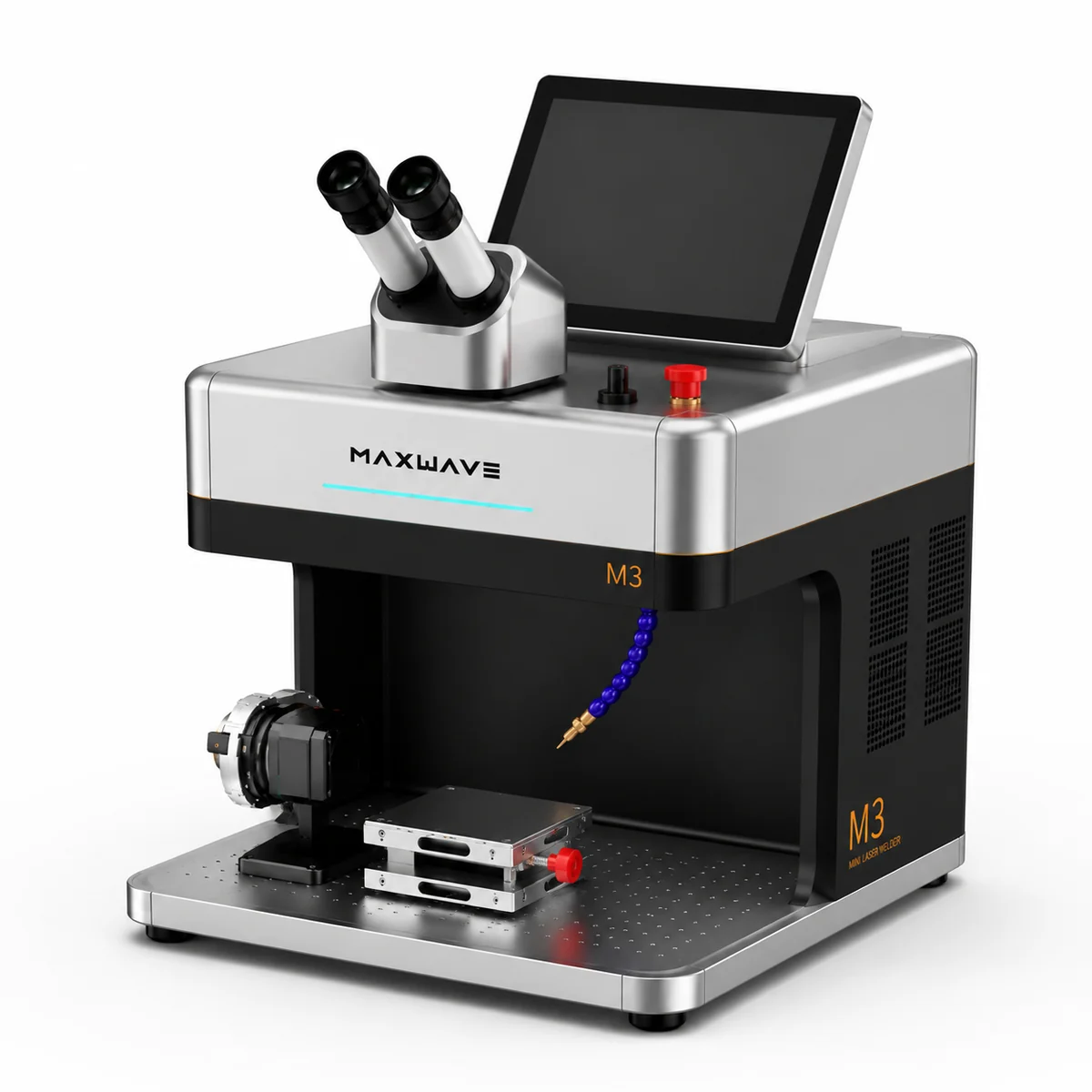
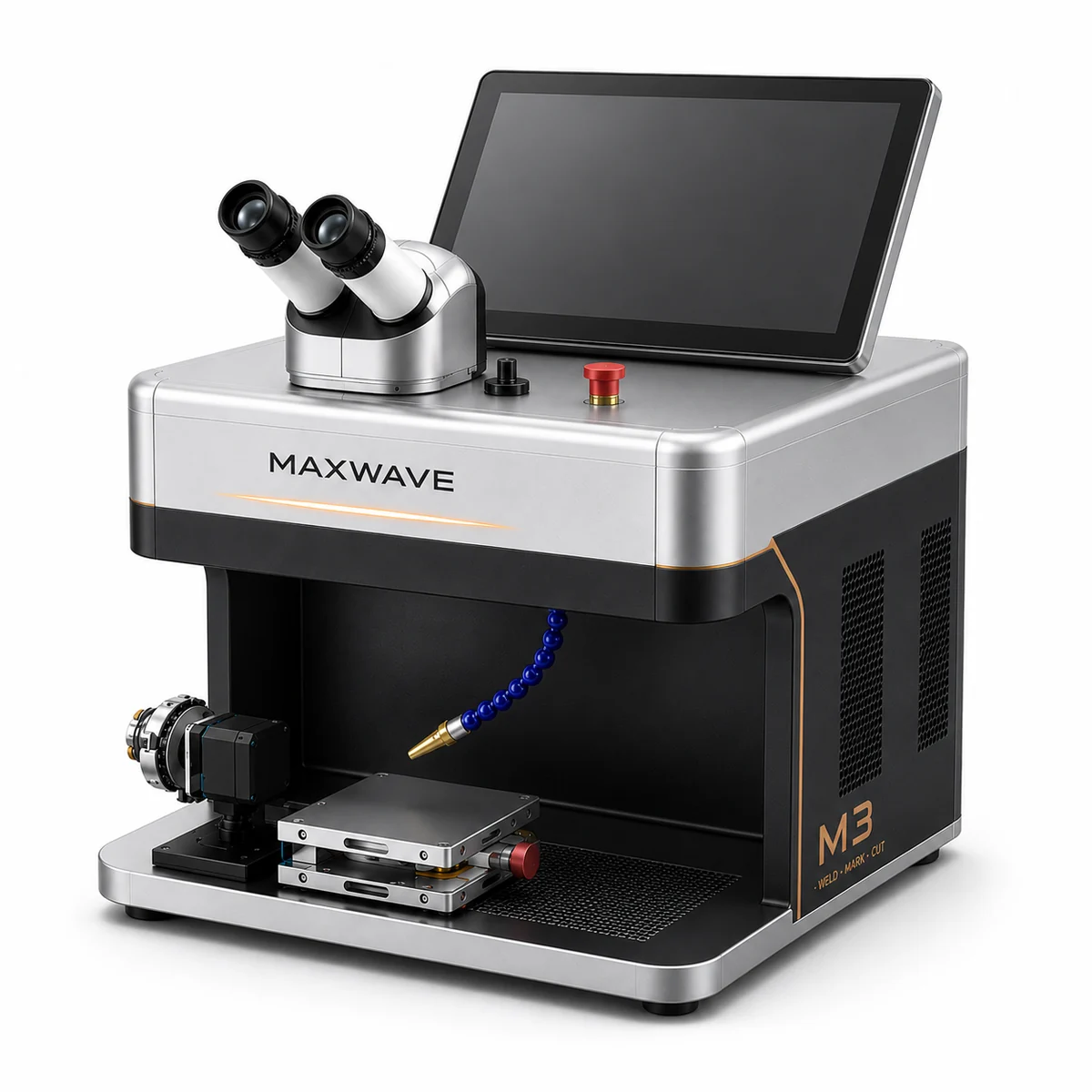
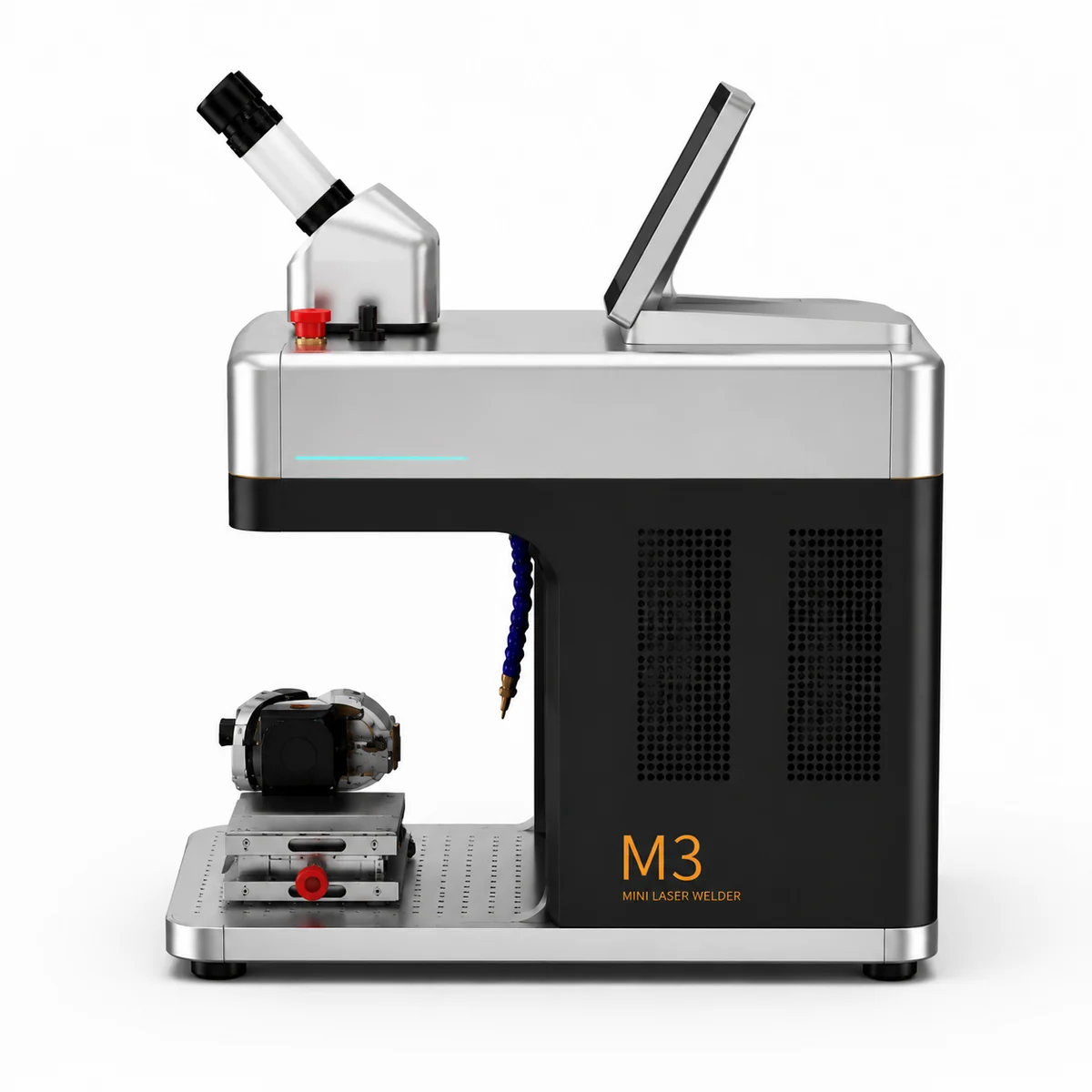
The M3 puts welding, MOPA marking and thin sheet cutting into one 300 × 340 × 320 mm, 30 kg air-cooled cabinet.

  • 3 in 1weld · mark · cut
  • 30 kgair cooled, no chiller
  • 1screen, socket, supplier
Welder Marker Cutter
Jewelry laser welder comparison: the M3 3-in-1 workstation that replaces a separate welder, marker and cutter
M3 · one cabinet

In summary

Five M3 Advantages Over a Multi-Machine Bench

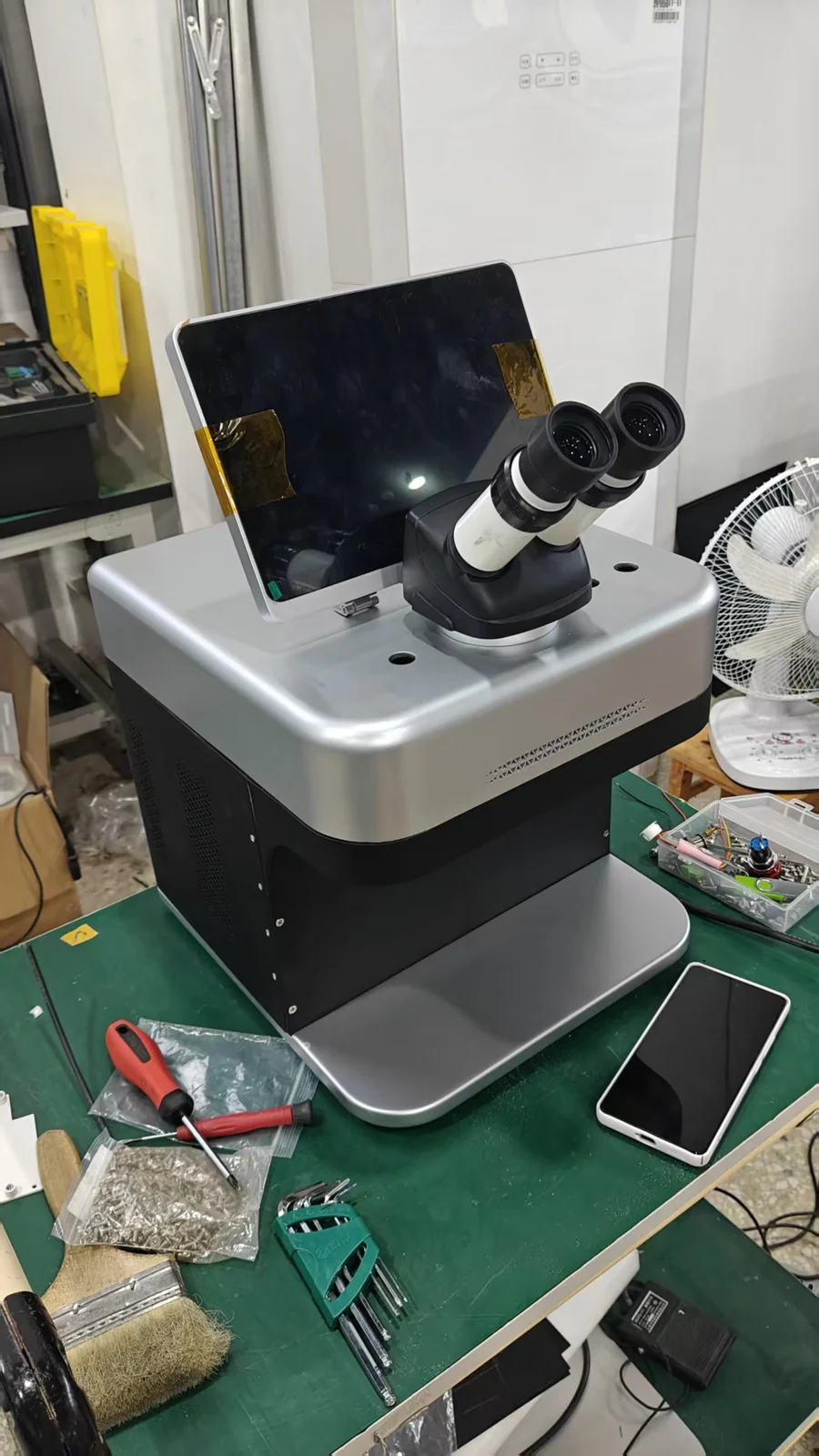
The M3 on a workshop bench beside a phone for scale

One cabinet in the space of one small welder

300 × 340 mm

That footprint already includes the cooling, which is air moved through the cabinet.

  • Desktop YAG: chiller or tank beside it
  • Separate marker: its own body and PC
  • M3: one position instead of three
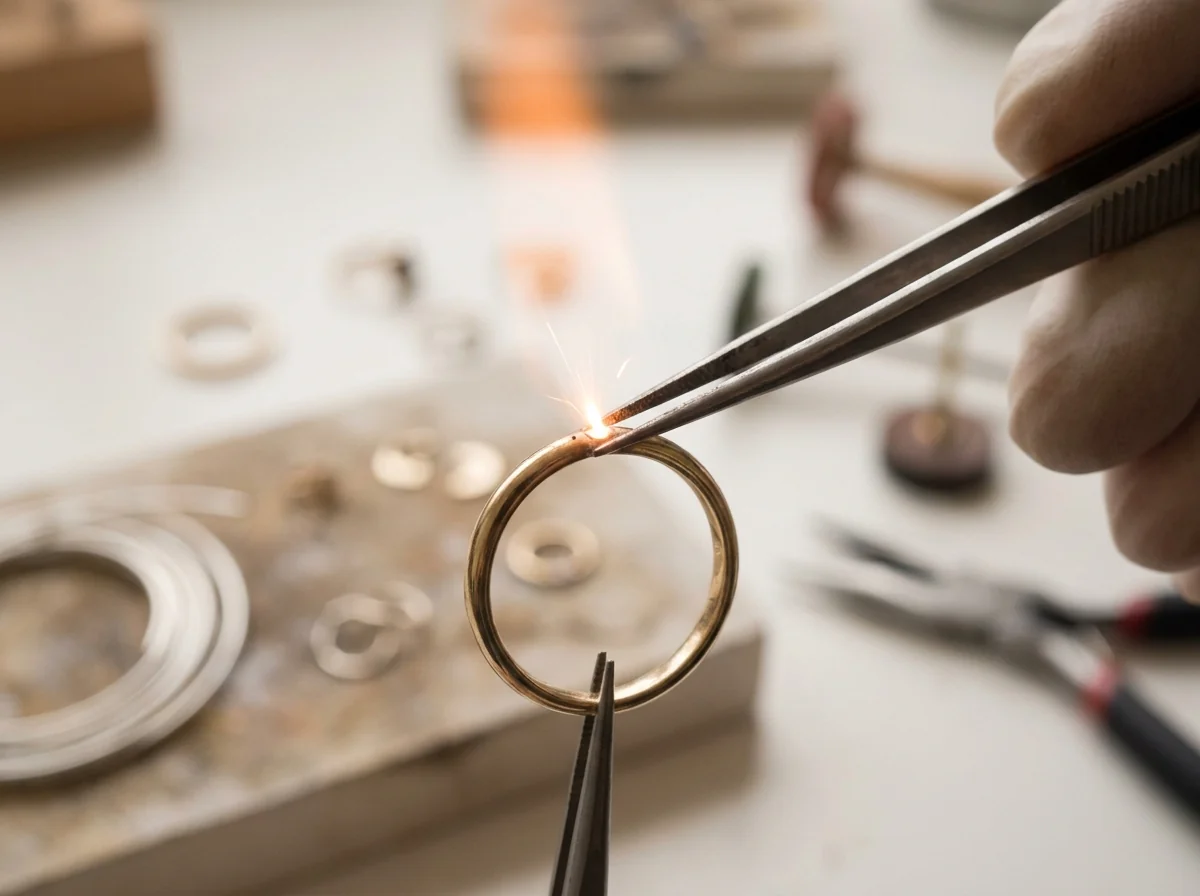
A tiny laser weld point on a gold ring shank

Two fiber sources, each built for its job

  • QCW welds: spot 0.1–2.0 mm by motor, 0.2–15 ms, 1–20 Hz, pedal fired
  • MOPA marks and cuts: M² 1.5, 0.01 mm, 7000 mm/s, color on steel and brass
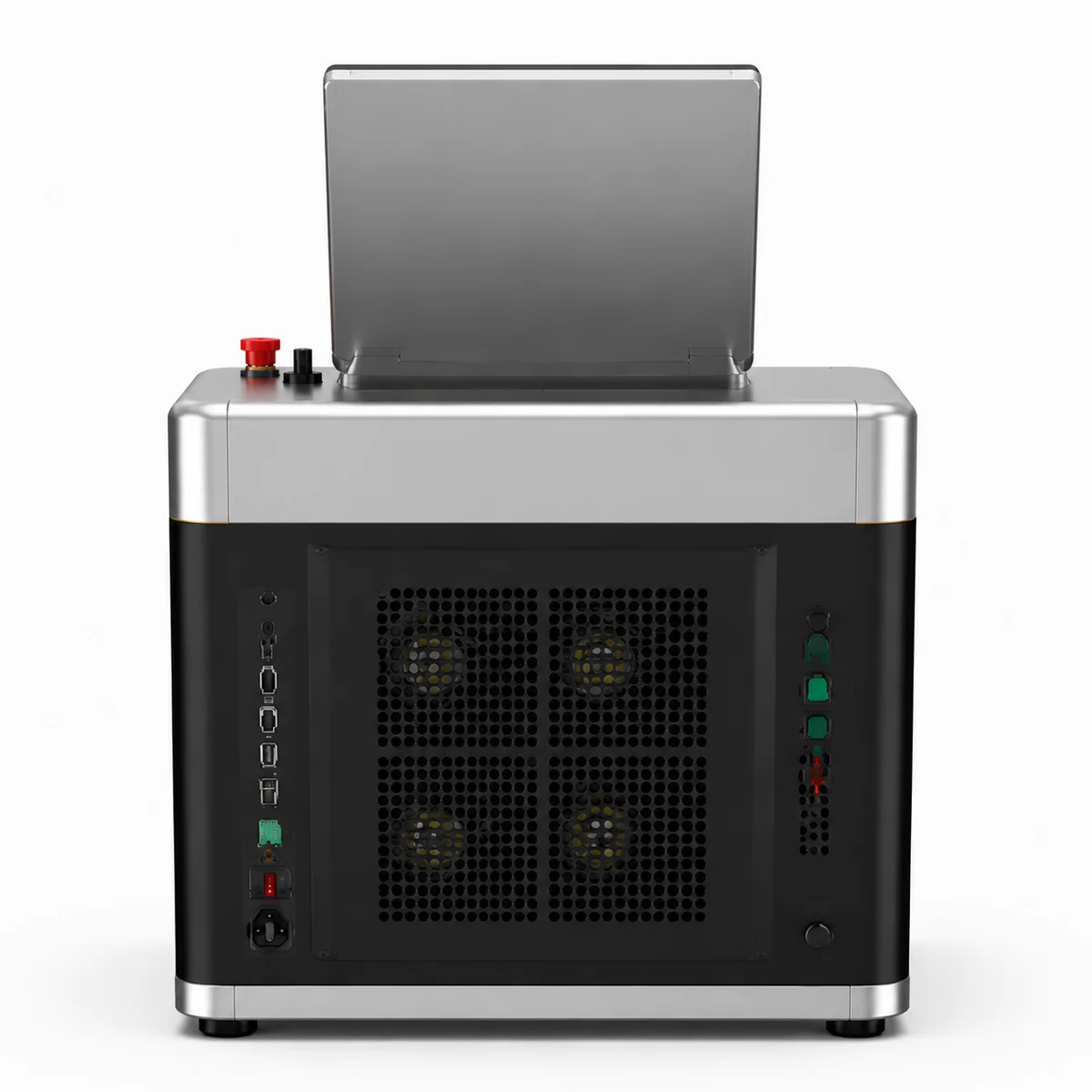
Air cooling vents on the rear of the M3 cabinet

Air cooling, a short consumables list

Fiber converts above 30% of input to light against about 3% for lamp-pumped YAG, so the cabinet cools itself with air. The routine consumable is the protective lens.

The 10 inch Android touchscreen on the M3

One screen to train on

Both programs run on one 10 inch Android touchscreen. Welding starts from a material dial, and the camera image is on the same screen, so an apprentice learns from it and a customer can watch the repair.

A laser power supply board being assembled in house

One supplier behind every function

  • Laser power supply and QCW source built in house
  • German Infineon IGBTs, quartz optics
  • Signed Quality Inspection Checklist with every unit

Against the market

Jewelry Laser Welder Comparison Table

In a jewelry laser welder comparison, buyers usually hold one of three machine types against the M3. The rows below decide how a bench runs. A dash means we hold no public figure for that cell.

M3 cabinetM3Compact European welderBlack mini YAG welderWhite 200 W desktop YAG
FunctionsWelding, marking and engraving, thin sheet cuttingWelding onlyWelding onlyWelding only
Laser typeDual 1064 nm fiber: QCW weld, MOPA mark and cut—Lamp-pumped YAGLamp-pumped YAG
Welding power120 W QCW, 1,200 W peakAbout 10 W average, about 2.5 kW peak on its newer versionTypically 100 / 150 / 200 W200 W
Marking and cuttingMOPA 10 / 20 / 30 / 60 W, 70 × 70 mm fieldNoneNoneNone
CoolingAir cooled, no chillerIntegrated liquid coolingWater cooledWater cooled, chiller or tank
Size and weight300 × 340 × 320 mm, 30 kgAbout 34 × 34 × 34 cm, about 15 kgLarger body—
Screen and control10 inch Android touchscreen, no PCPhone app——
Observation10X microscope + Sony 8 MP camera, HD 1080P / 1440P———
Daily consumablesProtective lens—Xenon lamp, crystal rod, lenses, lamp driver board, water pumpXenon lamp, crystal rod, lenses, lamp driver board, water pump

How to read this jewelry laser welder comparison: the compact European welder is the smallest, lightest machine in the table and carries the highest welding peak, and it welds only.

Both YAG types weld only and stand with water cooling. The M3 is the one column that covers welding, marking and cutting and needs no water. Next to any of the other three, the marker and the cutter still have to be bought, placed and learned.

Categories refer to machines such as DaDo (Elettrolaser), Riselaser YAG welders and common 200 W desktop YAG units. Figures from their public product pages, September 2026.

How the work runs

One Custom Order on Two Setups

An ordinary custom order: a silver name pendant to engrave, a clasp to weld on and a small tag to cut from sheet, walked through both setups step by step.

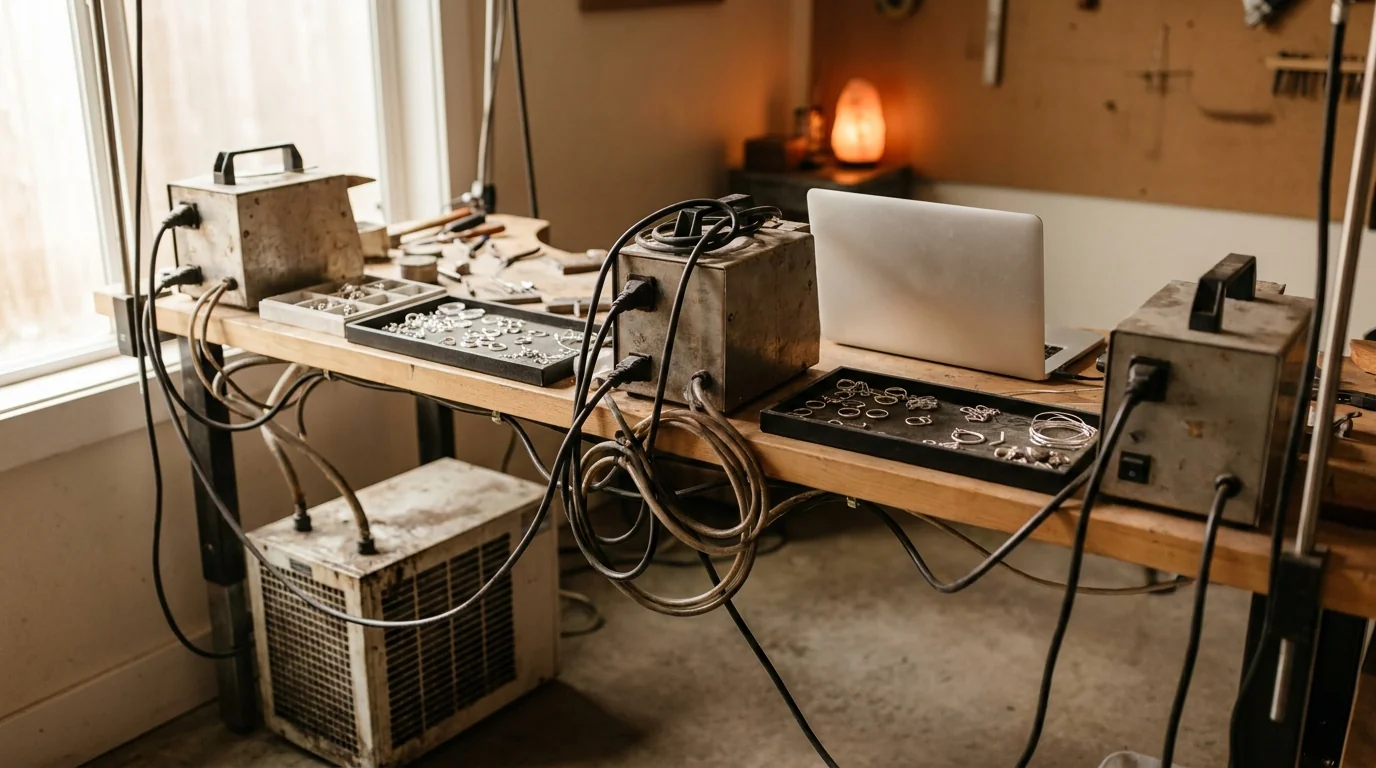
Jewelry laser welder comparison: a crowded workshop corner with three separate machines, cables and a water chiller

Multi-machine bench

  1. Marker + its PC. Open the name file, set marking parameters in that program, fixture the pendant, mark.
  2. Cutter. A second laser with its own file, fixture and extraction, or a job sent out.
  3. Welder, often another room. Start the water loop, set parameters on its own panel or app, weld the clasp.
  4. Hand-over. Marking and welding often sit with different people, so the job waits and parts are gathered back.

3 machines3 programsup to 3 operators

Jewelry laser welder comparison: the finished silver pendant, welded clasp and cut tag from one bench

On the M3

  1. Marking program. File in over USB, Wi-Fi or Bluetooth. Pendant in the left work area, red light traces the name on the piece, mark.
  2. Same program. Sheet into the cutting fixture with extraction on, the MOPA source cuts the tag.
  3. Switch to welding. The pendant stays put, because the left area takes welding too. Dial to SILVER, crosshair on the joint, weld from the pedal.
  4. Check on screen. The weld is read on the camera image, and the piece is done.

1 machine2 programs, 1 screen1 person

The M3 has two heads and two programs, so the operator switches program once, and the piece never leaves the work area. Grouping the day's marking and cutting into one block and the welding into another keeps that to once per batch.

For distributors

A 3-in-1 With No Direct Equivalent

Welding, MOPA marking and cutting in one 30 kg air-cooled desktop cabinet is a product your market cannot buy from the single-function brands. Cooperation runs as OEM, ODM or SKD.

  • Demo units shipped straight to your trade show
  • Your customers' pieces tested before they buy
  • Interface language and logo in your brand
Ask About Distribution

Dimension 1

Purchasing

A separate welder, marker and cutter means three suppliers who each specify their own machine, and none of them checks that the three fit together on your floor.

  • One quotation covering welding, marking, cutting and the options you choose.
  • One crate, 500 × 520 × 540 mm, 45 kg gross.
  • Photos and video of your unit before it leaves us.

The screen travels in a metal case and the machine in high strength foam. Distributors who exhibit can have the crate sent straight to the trade show site.

An export crate with foam packing and a metal case for the screenA trade show booth where a demo unit can be delivered
Three machines
  • 3 quotations
  • 3 shipments and customs files
  • 3 installations
  • 3 warranties to track
One M3
  • 1 quotation
  • 1 crate, 45 kg
  • 1 installation
  • 1 warranty
MULTI-MACHINE BENCH WELDER CHILLER MARKER PC CUTTER EXTRACT PLUS WALKING SPACE BETWEEN STATIONS M3 300×340 COOLING INCLUDED A jewelry store repair counter where a repaired ring is handed back to the customer

Dimension 2

Floor Space

A multi-machine bench is laid out around its biggest pieces and the services each one needs, plus walking space between stations.

  • YAG welder: chiller or water tank beside it, with access to refill.
  • Marker: a computer and keyboard next to it.
  • Cutter: extraction and room to handle sheet.

The M3 takes one 300 × 340 mm position with its cooling included. The extraction and cutting fixture join it only on days that include cutting. On a counter it can sit where customers see the work being done, which a welder with a chiller rarely can.

Dimension 3

Learning Cost

Three machines mean three interfaces, a welder panel or app, a marking program on a PC and whatever drives the cutter, and knowledge that sits with whoever runs each one.

When that person is off, the machine waits. On the M3 the same two programs run on one screen for every operator, so a second person can cover welding, marking and cutting after one training.

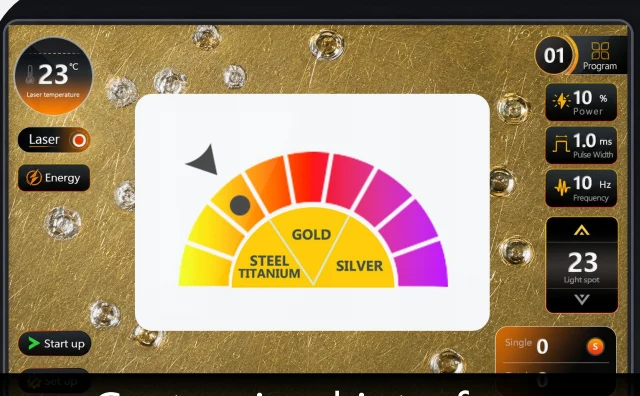
The welding program on the M3 screen with the material dial
Welding starts from the material dial
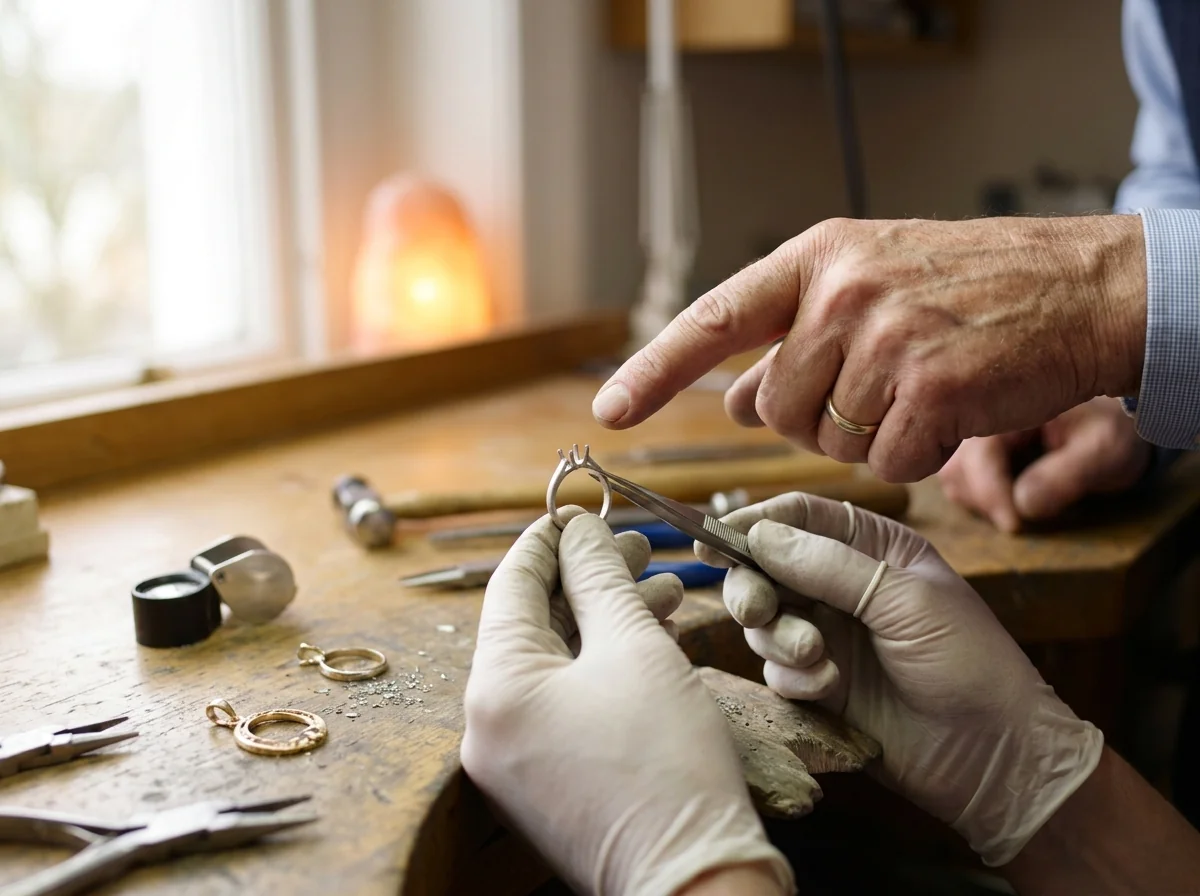
A senior jeweler teaching an apprentice at the bench
  1. Two programs, one screen. A new operator learns marking and welding on the same 10 inch panel.
  2. Welding from a dial. GOLD, STEEL, TITANIUM or SILVER loads a starting point; the first weld read under the microscope sets the trim. Platinum, copper and aluminum start from the nearest position.
  3. Marking from any common file. PLT, DXF, DST, AI, BMP, JPG, PNG, TIF, CAD, CDR, DWG and more, with the red light showing the result on the piece first.
  4. Taught from the screen. The camera image sits on the panel, so a senior jeweler teaches an apprentice there instead of taking turns at an eyepiece.

Dimension 4

Consumables and Maintenance

A lamp-pumped YAG welder is maintained around its lamp and its water, and a marker and a cutter each add their own lenses and service. The M3 has no lamp and no water loop; its fiber sources carry a rated life above 100,000 hours.

Lamp-pumped YAG welder
  • Xenon lamps
  • Crystal rods
  • Protective lenses
  • Lamp driver boards
  • Water pumps and water changes
M3
  • Protective lens

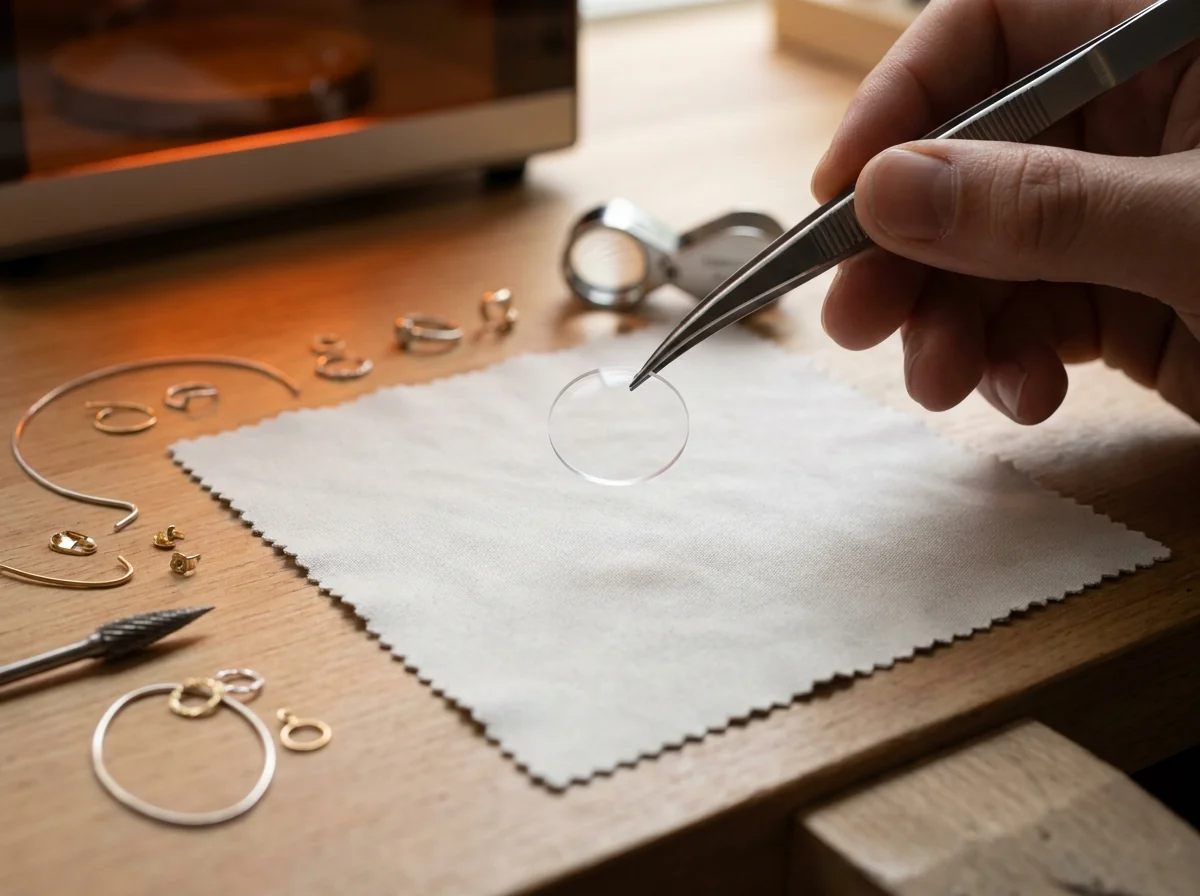
The lens keeps spatter off the optical path and is changed at the bench.

A protective lens held in tweezers over a lint-free cloth
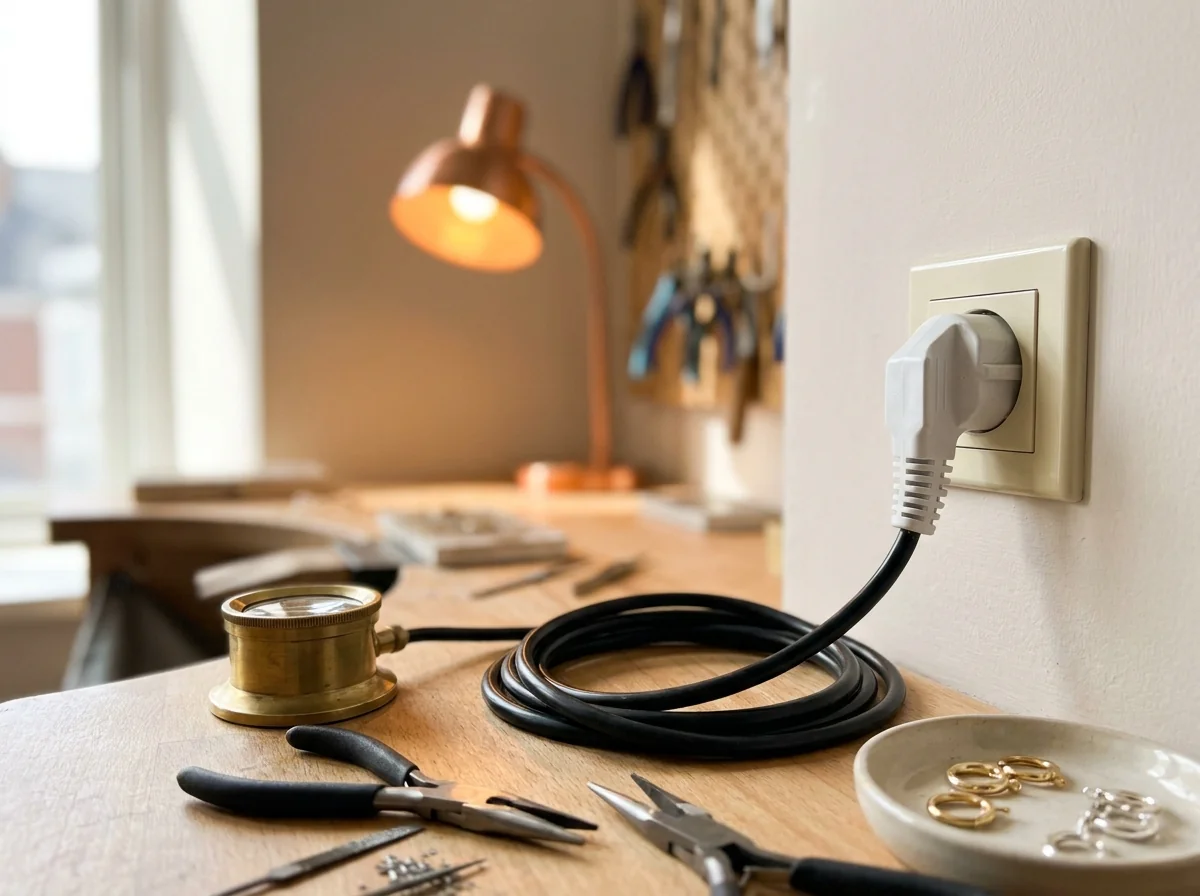
One plug in an ordinary wall socket above a jewelry bench
WelderChillerMarkerPCCutterExtraction
M3 · AC 220 V · 2 kW

Dimension 5

Power Supply

Every machine on a multi-machine bench needs its own supply, and a YAG welder's chiller or pump needs one too, so the bench has to be checked for several loads before anything is installed.

The M3 runs every function from one single phase socket.

Supply
AC 220 V, 50 Hz, 2 A
Total draw
2 kW, every function
Power stage
German Infineon IGBTs
Environment
0–40 °C, up to 80% humidity

A voltage regulation stage on the main board holds pulse energy steady, added after bracelet welds failed on unstable energy for a customer in Istanbul in 2021.

Dimension 6

After-Sales Contact

With three machines from three suppliers, every fault starts with a question before any repair: whose machine is it?

  • Each supplier works to its own warranty, hours and spare parts
  • The M3 has one contact for welding, marking and cutting
  • We build the power supply and QCW source, so questions reach their designers

Three suppliers

Fault → whose machine is it? → supplier A, B or C → each with its own warranty and hours

One M3

Fault → one contact → the people who built the power supply and the QCW source. Describe the fault or send a photo, and the reply comes from the team that designed the part, with no hand-off between a welder brand, a marker brand and a cutter brand.

A technician running a remote support session beside a jewelry bench
  • Warranty. Two years on the laser source, one year on the machine; lenses and consumables excluded.
  • In the crate. Quality Inspection Checklist, installation drawings and repair guidance.
  • Tracking. VIP orders followed one to one from dispatch to delivery.

Honest limits

Welding Limits in This Jewelry Laser Welder Comparison

120 W QCW · 1,200 W peak

Built for jewelry-scale welds in gold, silver, platinum, titanium, copper, aluminum and steel. It is not a welder for thick or large cross sections.

  • Some dedicated professional welders deliver a higher single-pulse peak.
  • The compact European welder in the table is smaller and lighter.
  • Established single-function brands have mature process libraries built over many years.
  • Their ergonomics are refined around one job, and local dealers come to the shop.
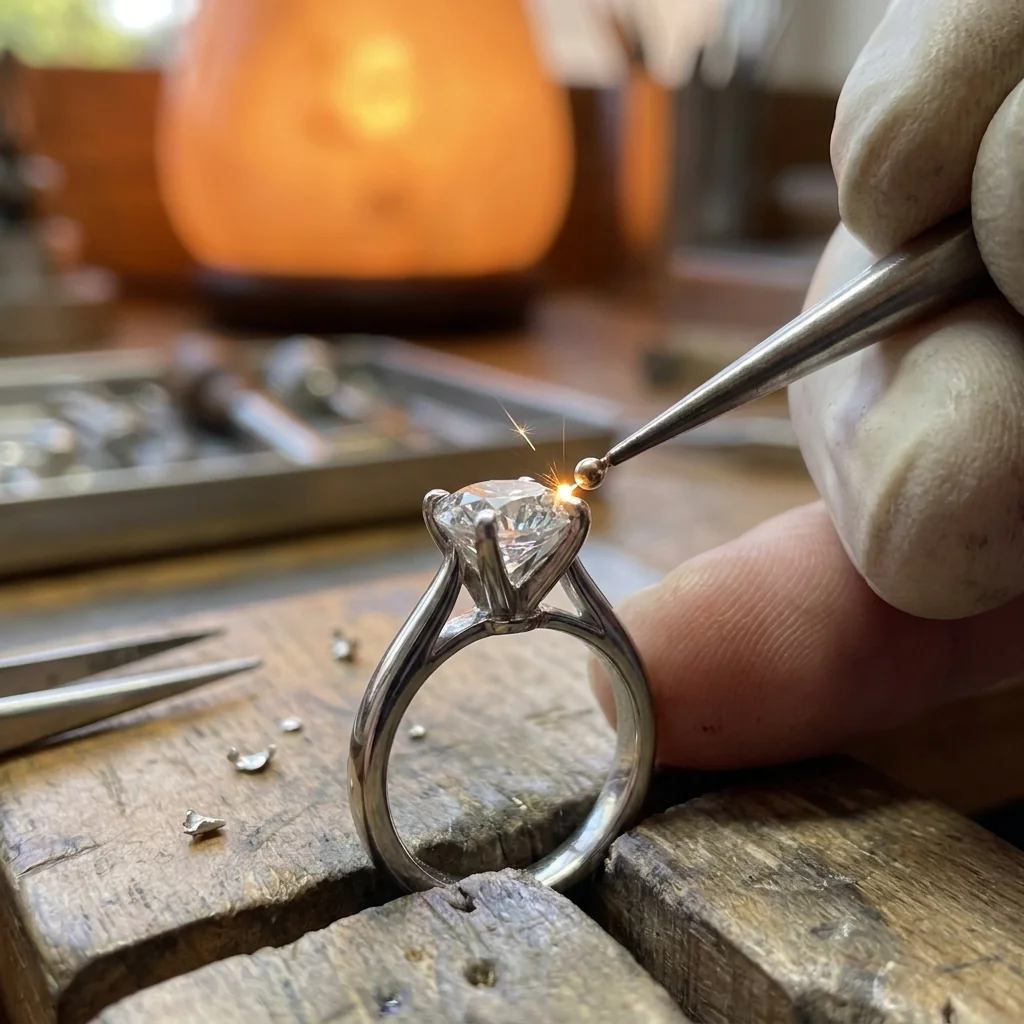
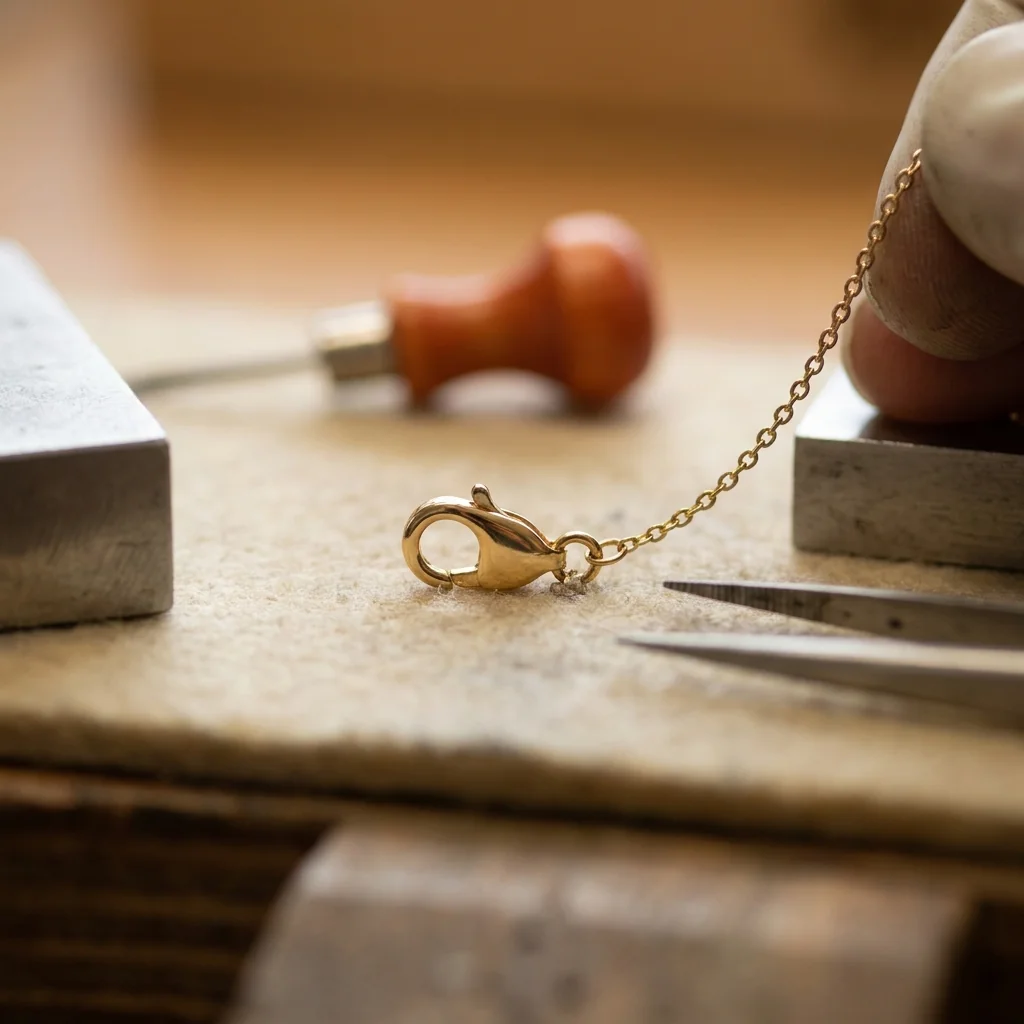
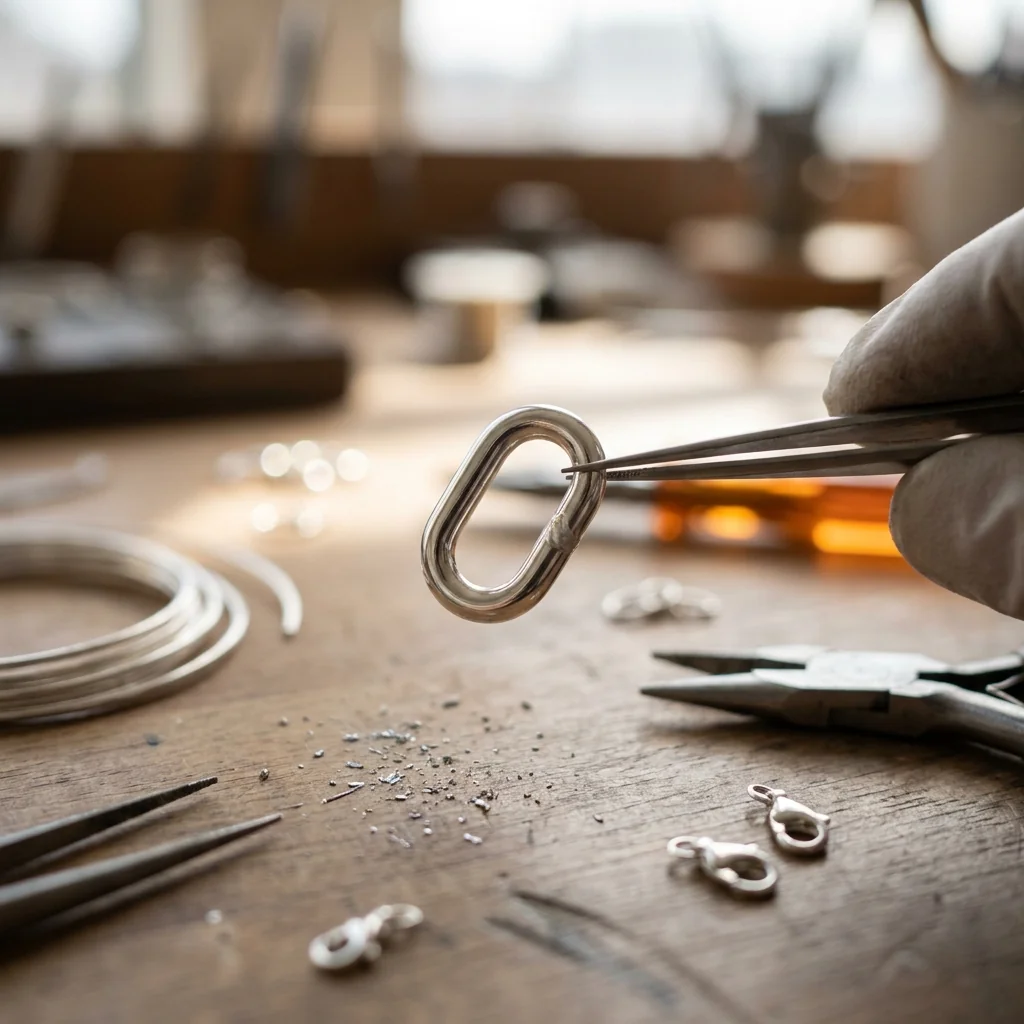
A platinum prong tip rebuilt on a diamond ringA lobster clasp welded to a fine gold chainA repaired silver chain link

Made for

  • Prongs
  • Clasps
  • Jump rings
  • Chain links
  • Ring shanks
  • Earring posts
  • Fine joints

Not made for

  • Thick sections
  • Large cross sections

We publish no maximum section, minimum part size or sheet thickness, because they depend on metal, alloy and joint. Send the heaviest joint you weld in a normal week and we weld it on an M3.

Send your heaviest joint

Conclusion

Jewelry Laser Welder Comparison: Who It Suits

The conclusion of this jewelry laser welder comparison: the M3 suits shops that do more than one laser job on small pieces and want those jobs on one bench.

  • A jewelry store repair counterJewelry stores with a repair counter that also engrave, short on space, working in view of customers.
  • An independent jewelry repair benchIndependent repair shops that weld daily and want engraving, logos and cut pieces as paid services without two more machines.
  • A personalization studio table with pendants and tagsCustom and personalization studios where one order needs marking, cutting and a weld.
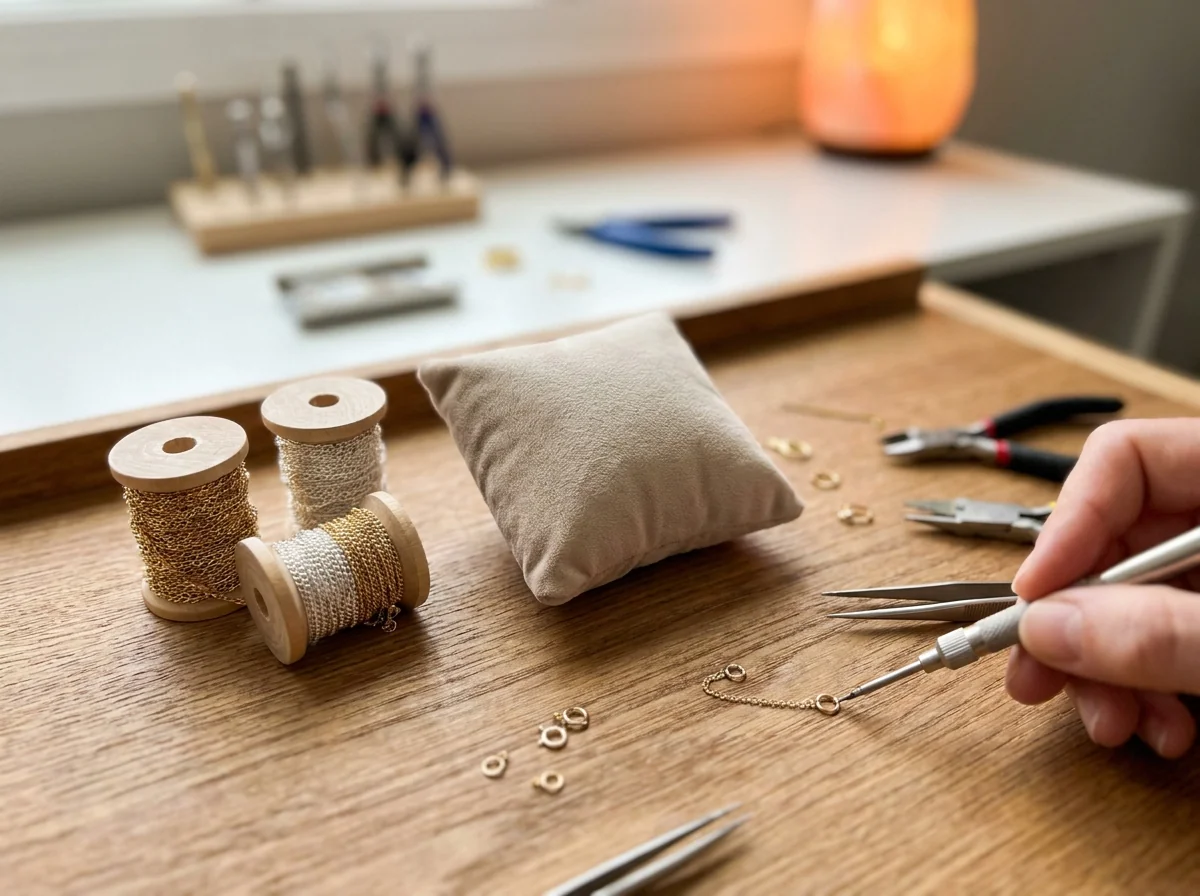
  • A permanent jewelry table with chain spoolsPermanent jewelry businesses and small workshops with no plumbing for a chiller.
  • A factory sample room shelfFactory sample rooms and aftersales desks handling mixed jobs in small quantities.
  • A distributor showroomDistributors who want a differentiated 3-in-1, with interface and logo in their own brand through OEM, ODM or SKD.

Choose a dedicated single-function welder if

  • Daily work is heavy sections and large joints that need more than 120 W QCW (1,200 W peak).
  • The shop welds all day and never marks or cuts.
  • The first requirement is the smallest possible welder; the compact European type is smaller and lighter.
  • A local service engineer at the door matters most; a brand with a dealer in your city may suit better.
  • You only need to mark and never weld; a dedicated fiber marker may be the simpler buy, and the M3 earns its place when welding is part of the week.

Settle it on your own work

Piece Test and Quotation Request

Send one piece you weld, one you engrave and one you cut, or list the jobs your bench does in a normal week. We run them on an M3, return them with the settings written down, and quote the MOPA configuration that fits.

  • Alloy and fineness
  • Section or sheet thickness
  • The job, and whether marking or cutting is included
  • Mains voltage and socket
  • Distributors: OEM, ODM or SKD interest

The piece is run on an M3 and sent back with the settings written down.